
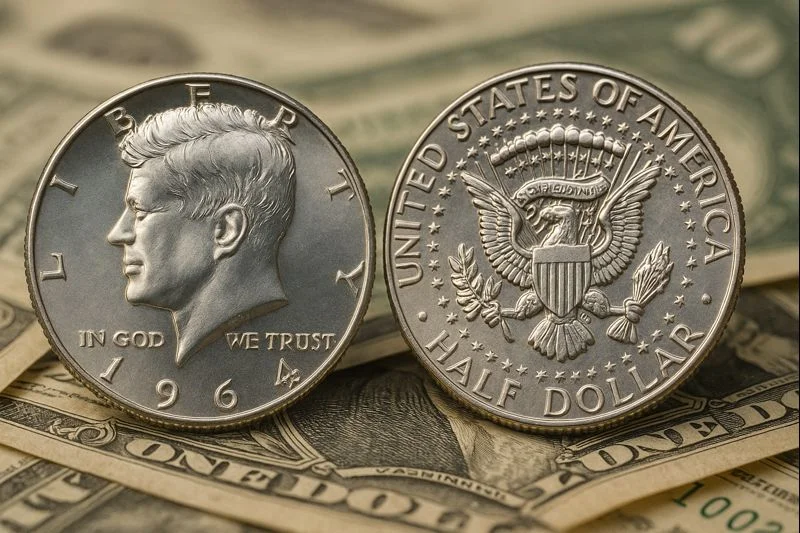
The Kennedy half dollar holds a steady place in U.S. numismatics. The series combines familiar imagery, a long production history, and a wide group of metal compositions.
Collectors study these coins because the design changes little, yet each period shows distinct traits. The coin is also practical for learning how metal, strike quality, and grade affect market behavior.
Here, we offer you to explore the essential information needed to identify, evaluate, and organize these halves without unnecessary terminology. The focus is on facts, visible features, and structured methods suitable for collectors at different skill levels.
Origin and Significance
The Kennedy half dollar first appeared in 1964 after a rapid design transition. Public demand was high, and the Mint prepared dies and tooling within a short period. This urgency influenced early striking characteristics and created several recognizable variations.
The coin also marked a turning point in U.S. monetary policy because silver content changed soon afterward. These factors make the series a clear example of how history and production conditions shape collectible material.
Collectors study this coin for several reasons. The series covers periods of silver, silver-clad alloy, and copper-nickel clad metal. It includes circulation strikes, proofs, SMS coins, and NIFC issues. It also contains known varieties that respond well to structured identification.
Historical Overview: Key Stages of Development
The coin’s history divides into several clear groups. Each group reflects economic decisions, metal availability, and changes in circulating coinage. Before analyzing types and varieties, it helps to view the timeline as a compact table with essential markers.
Production Phases of the Kennedy Half Dollar
| Period | Composition | Purpose | Notes |
| 1964 | 90% silver | Circulation and proof | First-year issue; high public demand |
| 1965–1970 | 40% silver | Circulation and SMS | Alloy change due to rising silver prices |
| 1971–2001 | Copper-nickel clad | Circulation and proof | Standardized modern composition |
| 2002–present | Copper-nickel clad | NIFC and proof | Most coins are issued only for collectors |
These decades reflect how the Mint adapted to metal markets and public use. The early silver years represent a link to older designs. The silver-clad period shows a transitional policy. Clad issues reflect modern efficiency. The NIFC era adds semi-collectible coins directly from the Mint rather than circulation.
Historical context matters because it explains why certain dates remain common and others appear in limited quantities. It also clarifies why some varieties form naturally and why certain issues show distinctive wear or strike differences.
Metal Composition and Its Role Across Periods
Metal serves as a constant reference point for collectors. This half dollar shows three main compositions, each influencing visual traits, durability, and price behavior.
90% silver (1964)
These coins hold a stable melt value and retain detail well due to the metal’s properties. Most examples show moderate wear because of heavy initial circulation. High-grade pieces still attract attention for both silver content and historical significance.
40% silver (1965–1970)
This alloy contains less silver but keeps a noticeable visual difference from clad issues. The surface shows different toning patterns. Many pieces remain in mid-grade condition. Higher-grade examples gain interest because strike quality varies, and fully lustrous pieces are less common.
Copper-nickel clad (1971–present)
Clad coins dominate the series by quantity. The metal is durable but lacks intrinsic value. Market behavior depends on grade, strike, and specific varieties rather than melt value. Proof issues in this group carry stronger premiums due to finish quality.
Metal composition affects how collectors sort mixed lots. It also influences how prices behave when silver markets fluctuate. Silver groups form a price floor, while clad issues rely on numismatic demand. Understanding these patterns helps avoid misinterpretation during evaluation.
Main Types and Recognized Varieties
The series contains several clear strike types and varieties. Each type requires different inspection methods.
Circulation strikes
Made for everyday transactions. Wear appears quickly on high points. Collectors check hair detail, cheek contours, and feather definition to estimate use.
Proof strikes
Struck with polished dies and controlled pressure. Mirror fields contrast with frosted devices. Cameo and Deep Cameo levels affect market value. Surface haze or contact spots reduce grade sharply.
Special Mint Set (SMS) coins
Issued from 1965 to 1967. These pieces sit between proofs and regular strikes. Many show strong strikes with satin-like surfaces.
Known varieties:
- 1964 Accented Hair proof, identified by stronger hair definition and modified lettering.
- 1972-D No FG, caused by die polishing that removes the designer’s initials.
- 1974-D doubled die, visible as doubling on inscriptions.
- Additional minor anomalies linked to die wear or die fatigue.
Varieties offer structured learning because diagnostics repeat across examples. Each variety also demonstrates how production tools influence final design traits.
Value Factors: What Shapes Market Behavior
Price structure depends on several practical conditions. The following factors appear consistently across markets:
- Year and mintage: Lower production levels increase scarcity.
- Metal content: Silver groups follow metal price movement.
- Condition level: Grade remains the strongest price multiplier.
- Strike type: Proof and SMS coins behave differently from circulation strikes.
- Varieties: Clear diagnostics increase desirability.
- Demand stability: Collector interest varies by era and economic context.
Collectors often use a coin values app to check common price ranges. These tools help during early sorting when handling mixed lots or estate material, or reviewing unknown dates or types. These apps support routine scanning but do not replace manual inspection of detail, color, and strike clarity.
Identification Techniques for Kennedy Half Dollars
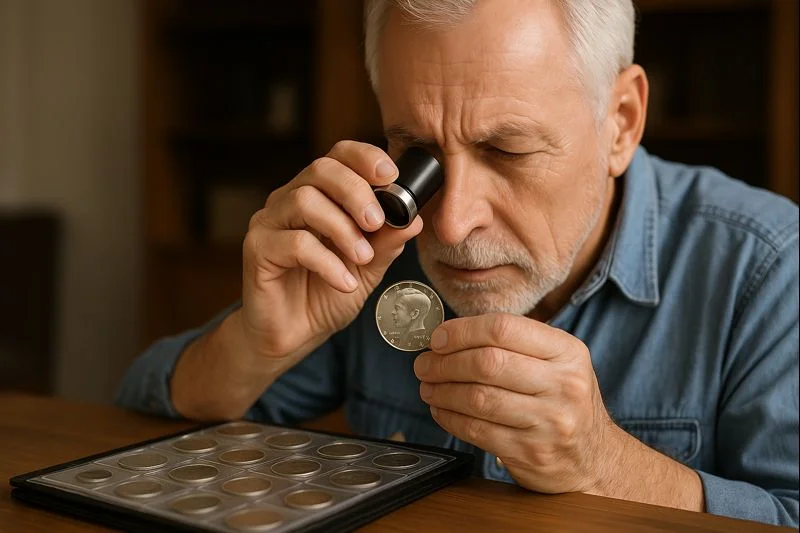
Accurate identification requires a structured inspection. The coin provides several markers that assist classification.
- Obverse checkpoints
Hair above the ear shows wear quickly. The cheek and jawline flatten under circulation. Lettering near the rim helps evaluate strike strength.
- Reverse checkpoints
Feather texture, shield lines, and star patterns remain key indicators. The FG initials help detect specific varieties. Weak initials may appear due to wear or polishing.
- Metal recognition
Silver issues show solid rims with consistent tone. Clad coins reveal copper layers at the rim. Visual cues remain reliable when viewed under soft light.
- Mint marks
Placement below the portrait identifies the mint origin. San Francisco marks a link to proof and NIFC strikes.
A good idea is to find and use a coin identifier app free of charge. For example, Coin ID Scanner helps verify metal, diameter, date ranges, and general type by reading contours from a photo. What is more, you can also manage your collection digitally, ask a built-in AI assistant your questions, and refer to the app’s blog to review articles, overviews, and care tips.
Grading Overview: Practical Assessment
Grading these half dollars involves checking predictable wear patterns and comparing them to reference examples.
Circulation pieces
Wear appears on the highest hair points, the cheek, and eagle feathers. Loss of luster indicates use. Scattered contact marks affect the grade when concentrated on focal areas.
Uncirculated pieces
Luster quality, strike sharpness, and surface marks determine MS levels. MS65 coins show clean fields but may reveal small marks. MS66 and MS67 examples display stronger eye appeal and fewer distractions.
Proof coins
Surface clarity and contrast determine grade. Any haze or toning reduces value. Deep Cameo designations depend on clear separation between frosted devices and mirror fields.
Collectors focus on consistency. Observing several coins side by side helps develop recognition of grade boundaries. Documentation of personal standards also prevents overestimation.
Important Years and Notable Issues
Several groups stand out due to composition, rarity, or variation. Before reviewing their traits, a compact table organizes the most discussed dates.
Key Issues in the Kennedy Half Dollar Series
| Category | Examples | Notes |
| First-year silver | 1964 | Strong demand; proof variety Accented Hair |
| Silver-clad | 1965–1970 | Transitional alloy; varied strike strength |
| Varieties | 1972-D No FG, 1974-D DDO | Recognizable diagnostics; consistent interest |
| NIFC | 2002–present | Limited distribution; stable small premiums |
1964 issues: Hold strong collector interest due to silver content and historical context. Proof sets with Accented Hair remain sought after.
1965–1970 issues: Transition years with mixed strike quality. Many pieces survive, but high-grade luster remains less common.
1972-D No FG variety: Formed by die polishing. Easy to confirm with magnification. Survives in varied grades.
1974-D doubled die: Doubling appears on inscriptions. The variety remains popular among specialists.
NIFC issues: Modern releases intended for collectors. Found less often in circulation. Condition plays a major role in value.
These groups demonstrate how composition, distribution method, and production tools create collectible differences.
Market Value: How Pricing Forms and Changes
Market behavior follows predictable patterns when viewed across decades.
Metal-driven value
Silver issues respond to spot price movement. When metal rises, demand increases. Melt value sets a firm baseline for 1964 and 1965–1970 coins.
Proof market
Proof halves attract attention due to the finish. Cameo and Deep Cameo distinctions significantly affect price. Condition-sensitive coins show sharper differences between grades.
Varieties
Diagnostic clarity impacts desirability. Varieties with strong markers maintain long-term interest because they allow consistent identification across samples.
Clad issues
Circulation pieces hold modest value unless preserved in high condition. MS67 and MS68 examples can attract competitive bidding because of low populations.
Demand patterns
Interest in the Kennedy half dollar remains stable within U.S. collecting. Prices move with silver trends, grading trends, and availability on secondary markets.
Final Overview
The Kennedy half dollar remains an interesting and accessible series. Its long history, metal diversity, and known varieties create a balanced field for study. Clear design features allow reliable grading practice. Composition changes offer insight into economic decisions. Proof and NIFC issues add controlled variations that broaden collecting options. So every beginner and experienced one will find a coin to add to their collection.
